Dr. Gaurav Aggarwal | Uro-Oncologist in Kolkata

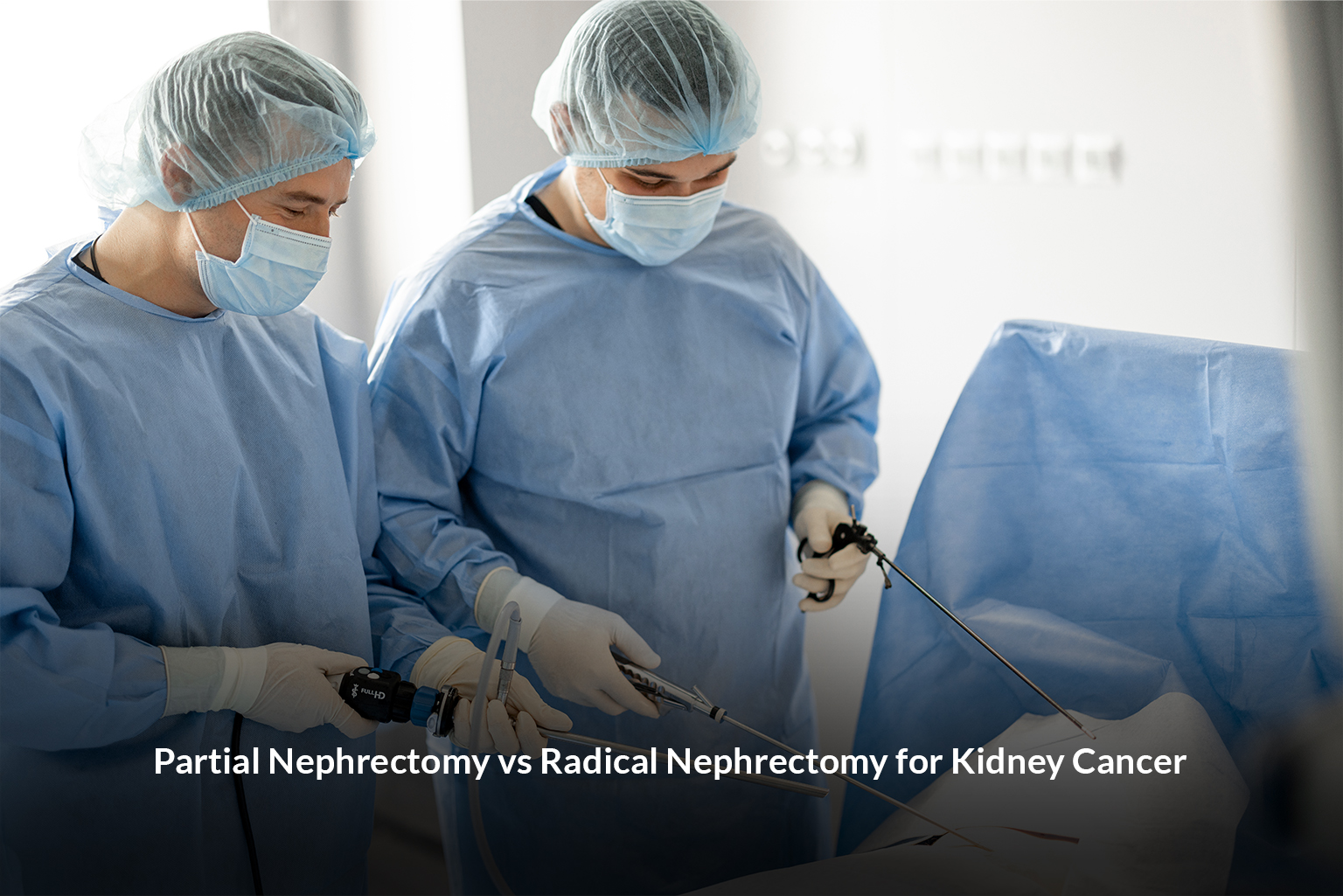
Partial Nephrectomy vs Radical Nephrectomy for Kidney Cancer

Kidney Cancer Treatment in Newtown

Authored by:

Dr Gaurav Aggarwal (Uro-oncologist and Robotic Surgeon) 

When facing a kidney cancer diagnosis, one of the most important decisions you and your surgeon will make is the type of surgery. For patients seeking Kidney Cancer Treatment in Newtown, understanding the difference between partial and radical nephrectomy can help you make a more informed, confident choice.

What is Kidney Cancer Surgery?

Surgery remains the primary treatment approach for kidney cancer (renal cell carcinoma). The goal is to remove the tumour completely and in some cases, the entire kidney. Two main surgical options are available:

  •         Partial Nephrectomy: Removal of only the tumour while preserving the healthy kidney tissue
  •         Radical Nephrectomy: Removal of the entire kidney, along with surrounding tissue and sometimes nearby lymph nodes

Both procedures can be performed through open surgery or minimally invasive techniques (laparoscopic or robotic-assisted). Your specialist offering Kidney Cancer Treatment in Newtown will recommend an approach based on your specific diagnosis.


Partial Nephrectomy: Preserving What You Can

What happens during partial nephrectomy?

The surgeon carefully removes only the cancerous portion of the kidney, leaving healthy tissue intact. This approach is now considered the gold standard for small, localised tumours (typically under 4–7 cm).

Who is a candidate?

  •         Tumours smaller than 7 cm (T1 stage)
  •         Tumours located on the outer edge of the kidney
  •         Patients with a single kidney, reduced kidney function, or diabetes
  •         Younger patients who wish to preserve long-term kidney health
  •         Bilateral tumours (cancer in both kidneys)

Benefits of partial nephrectomy

  •         Preserves kidney function, reducing risk of chronic kidney disease (CKD)
  •         Lower risk of developing cardiovascular complications long-term
  •         Comparable cancer control outcomes to radical nephrectomy for eligible cases
  •         May reduce long-term dependence on dialysis
  •         Preferred approach when technically feasible, per international guidelines

Limitations

  •         Technically more complex requires experienced surgical expertise
  •         Slightly higher risk of intraoperative bleeding
  •         Not always feasible for large or centrally located tumours
  •         Longer operative time in some cases

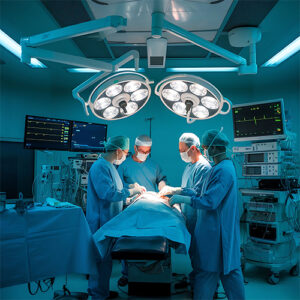
operation theater

Radical Nephrectomy: Complete Removal When Necessary

What happens during radical nephrectomy?

The entire kidney is removed, along with the adrenal gland (in some cases), surrounding fat, and nearby lymph nodes. The remaining kidney compensates for kidney function over time.

Who is a candidate?

  •         Large tumours (greater than 7 cm, T2 stage or higher)
  •         Tumours invading the renal vein or surrounding structures
  •         Complex tumour location that makes partial removal too risky
  •         Patients with healthy, fully functional opposite kidney
  •         Advanced or locally invasive renal cancer

Benefits of radical nephrectomy

  •         Effective for larger, more complex, or locally advanced tumours
  •         Simpler procedure with generally lower risk of bleeding
  •         Complete removal reduces chance of local recurrence
  •         May be combined with lymph node dissection for staging
  •         Widely available and well-established surgical technique

Limitations

  •         Permanent loss of kidney remaining kidney must take on full workload
  •         Higher long-term risk of chronic kidney disease
  •         May increase risk of hypertension and cardiovascular disease over time
  •         Potential need for regular kidney function monitoring post-surgery

Minimally Invasive Options: Laparoscopic & Robotic Surgery

Today, most kidney cancer treatment in Newtown and beyond are performed using minimally invasive techniques. Whether partial or radical, laparoscopic and robotic-assisted approaches offer:

  •         Smaller incisions and less scarring
  •         Reduced blood loss and lower infection risk
  •         Shorter hospital stay (typically 1–3 days)
  •         Faster return to daily activities
  •         Similar or better cancer control outcomes compared to open surgery

When choosing Kidney Cancer Treatment in Newtown, ask your surgeon whether robotic assisted nephrectomy is available, as it provides superior precision for nephron-sparing procedures.

Kidney Cancer Treatment

Recovery: What to Expect After Surgery

Partial Nephrectomy Recovery

  •         Hospital stay: 2–4 days (minimally invasive); up to 5–7 days (open)
  •         Return to light activity: 2–3 weeks
  •         Full recovery: 4–6 weeks
  •         Kidney function monitoring recommended at 3 and 6 months
  •         Follow-up imaging (CT/MRI) at regular intervals

Radical Nephrectomy Recovery

  •         Hospital stay: 2–5 days (minimally invasive); up to 7 days (open)
  •         Return to light activity: 2–4 weeks
  •         Full recovery: 4–8 weeks
  •         Lifelong monitoring of remaining kidney function required
  •         Dietary guidance and blood pressure management may be advised

How Your Surgeon Decides Which Approach is Best

Choosing the right procedure for Kidney Cancer Treatment in Newtown involves evaluating several key factors:

  •         Tumour size and stage: Small, localised tumours favour partial nephrectomy; large or invasive tumours often require radical removal
  •         Tumour location: Peripherally located tumours are easier to remove partially; central tumours near blood vessels may necessitate radical surgery
  •         Overall kidney function: If existing kidney function is compromised, every nephron matters making partial nephrectomy the priority
  •         Patient’s overall health: Comorbidities, age, and surgical fitness influence the approach chosen
  •         Surgical expertise: Partial nephrectomy requires a highly skilled team specialised centres in Newtown offer both options
  •         Patient preference: After thorough counselling, patient preference plays a role in shared decision-making

Life After Nephrectomy: Long-Term Outlook

Most patients who receive timely surgical treatment for kidney cancer go on to live full, active lives. Key points to know:

  •         The 5-year survival rate for Stage I kidney cancer exceeds 90% with appropriate surgery
  •         The remaining kidney (after radical nephrectomy) adapts significantly over time
  •         Lifestyle adjustments such as staying hydrated, limiting NSAIDs, and managing blood pressure support kidney health
  •         Regular oncology follow-ups catch any recurrence early
  •         Many patients resume work and exercise within 6–8 weeks post-surgery

 For complete guidance tailored to your individual situation, consult an experienced urologist offering Kidney Cancer Treatment in Newtown.

Ready to discuss your kidney cancer treatment options?

Our specialist urology team in Newtown is here to guide you through every step from diagnosis to surgery and recovery.

Book a Consultation Today: Contact Us

FAQ

  • Is partial nephrectomy always better than radical nephrectomy?

    Not always partial nephrectomy is preferred for small, localised tumours to preserve kidney function

    •         Radical nephrectomy is the safer choice for large, complex, or locally invasive tumours
    •         Your urologist will recommend the most appropriate procedure based on tumour characteristics, kidney function, and overall health
    •         The goal of Kidney Cancer Treatment in Newtown is to achieve the best cancer control while minimising impact on quality of life
  • Can I live normally with only one kidney after radical nephrectomy?

    Yes most people live full, healthy lives with a single kidney.

  • How long does kidney cancer surgery take, and how soon can I go home?

    Minimally invasive partial nephrectomy typically takes 2–3 hours; radical nephrectomy is often slightly shorter

    •         Hospital stays range from 2–5 days for minimally invasive procedures
    •         Open surgeries may require up to 7 days in hospital
    •         Most patients go home within 2–3 days and resume light activities within 2–3 weeks
  • What are the chances of kidney cancer coming back after surgery?

    For Stage I tumours (small, localised), the 5-year recurrence-free survival rate is over 90%.

  • Is robotic surgery available for kidney cancer treatment in Newtown?

    Yes robotic assisted nephrectomy (both partial and radical) is available at specialised urology centres in Newtown.