
Dr. Gaurav Aggarwal | Uro-Oncologist in Kolkata

Why Regular Health Check-Ups Can Help Detect Urological Diseases Early

Uro-Oncologist in Newtown Kolkata

Authored by:

Dr Gaurav Aggarwal (Uro-oncologist and Robotic Surgeon) 

When it comes to your health, waiting for something to feel wrong is not always the best approach. Some urological diseases, including cancers, can develop quietly without causing noticeable symptoms in the early stages. By the time warning signs appear, the condition may already have progressed.

That is why regular health check-ups matter. They give you and your doctor an opportunity to identify potential problems earlier, understand your individual risk, and decide on the right course of action. Early detection can make treatment simpler, improve outcomes, and help protect your quality of life.

Why Early Detection Matters in Urological Cancers

Many urological cancers can develop silently. A person may feel completely fine while changes are already taking place inside the body. Regular screening can help identify these changes before they become more difficult to treat.

Early detection can offer several important advantages:

  • Symptom-free detection: Cancer may be identified before noticeable symptoms appear.
  • Smaller tumour size: Early-stage tumours are generally smaller and more contained.
  • Better treatment outcomes: localised disease often responds more favourably to treatment.
  • More treatment choices: Early detection can make minimally invasive approaches, including robotic surgery, possible.
  • Improved survival rates: Detecting cancer early can significantly improve long-term outcomes.
  • Better quality of life: Early treatment can mean fewer complications and a faster recovery.

Simply put, waiting for symptoms is not always the safest strategy.
Uro oncologist in Newtown Kolkata

Understanding Prostate Cancer Screening

Prostate cancer is the most common urological cancer among men. Regular screening helps doctors understand what is happening with the prostate and whether further investigation may be needed.

Depending on your age and individual risk, screening may include the following:

  • PSA blood test: Measures prostate-specific antigen levels. An elevated result may require further evaluation.
  • Digital rectal examination (DRE): Helps assess the size and texture of the prostate.
  • Risk assessment: Screening results help determine whether additional imaging or a biopsy may be appropriate.
  • Baseline testing: An initial result provides a reference point for future comparisons.
  • Age and family history: Men with a family history may need to begin screening earlier.
  • Personalised monitoring: Your urologist can recommend the appropriate screening frequency based on your individual risk.

Not every man needs the same screening schedule. Your doctor should personalise the approach according to your health profile and risk factors.

Who Should Consider Regular Screening?

While everyone can benefit from paying attention to their urological health, certain groups may need closer monitoring.

Regular check-ups are particularly important for:

  • Men over 50: Age is an important risk factor for prostate cancer.
  • Men with a family history: A family history can increase cancer risk.
  • Men over 40 with a family history: Earlier screening may be recommended for higher-risk families.
  • African men: Higher incidence rates make proactive monitoring particularly important.
  • Men with elevated PSA: Previous abnormal results may require continued surveillance.
  • Men experiencing symptoms: Urinary or pelvic symptoms should be evaluated promptly.

Regular monitoring can act as an early warning system, especially for people who are more likely to develop urological diseases.

The Role of Advanced Imaging in Early Detection

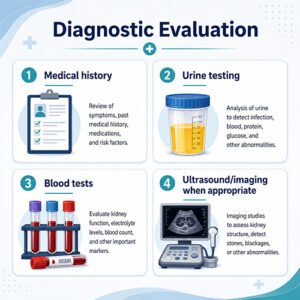
Modern diagnostic technology has made it possible for doctors to investigate suspicious findings with greater accuracy. Depending on the situation, your doctor may recommend advanced diagnostic tests such as:

  • MRI fusion imaging: Helps with precise tumor localization.
  • Transrectal ultrasound: Can guide biopsy procedures.
  • CT scanning: Helps determine whether cancer has spread beyond the prostate.
  • PET imaging: Can help identify metastatic disease in advanced cases.
  • Biomarker testing: May provide information about cancer aggressiveness and progression risk.
  • Genomic testing: Can help predict treatment response and individual prognosis.

These technologies give doctors a clearer picture of the disease and help them make more informed treatment decisions.

Why Robotic Expertise Matters in Prostate Cancer Treatment

When prostate cancer is detected at an early stage, choosing the right treatment team becomes an important part of the journey. The best robotic surgeons for prostate cancer can offer patients access to highly precise, minimally invasive surgical treatment when robotic surgery is appropriate.

Robotic surgery can provide the following:

  • Precision and control: Robotic systems allow highly precise surgical movements.
  • Nerve preservation: Enhanced visualisation can help surgeons protect important nerves.
  • Minimal invasion: Smaller incisions can reduce surgical trauma and blood loss.
  • Faster recovery: Patients can often return to normal activities sooner.
  • Better functional outcomes: Early-stage treatment may help preserve continence and sexual function.
  • Cancer control: Robotic prostatectomy can provide effective oncological treatment.

Early detection combined with experienced robotic surgical care can create a more favourable treatment pathway for eligible patients.

Symptoms You Should Never Ignore

Although some urological cancers may have no symptoms in their early stages, certain changes should never simply be brushed aside.

Speak to a doctor if you notice:

  • A weak urinary stream or difficulty emptying your bladder
  • Sudden or increasing urinary urgency or frequency
  • Pelvic, perineal, lower abdominal, or lower back pain
  • Blood in the urine, whether visible or detected through testing
  • Sudden changes in erectile function
  • A lump or swelling in the testicle

These symptoms do not automatically mean cancer. However, they deserve proper medical evaluation rather than being ignored.

From Screening to Treatment: What Happens Next?

One of the biggest concerns patients have after an abnormal screening result is, “What happens now?”

The process generally follows a structured pathway:

  • Initial screening: PSA testing, DRE, and risk assessment.
  • Confirmation testing: MRI or other advanced imaging when required.
  • Biopsy: Tissue sampling may be performed if indicated.
  • Staging: Imaging helps determine whether the cancer is localised or has spread.
  • Treatment planning: Your surgeon reviews the findings and discusses suitable treatment options.
  • Intervention: Early-stage cancers identified through screening may proceed to robotic surgery.

Having a clear pathway can make an otherwise stressful experience feel more manageable.

What Can Happen When Detection Is Delayed?

It is easy to postpone a health check when you feel perfectly fine. But delaying screening or ignoring symptoms can have consequences.

Late detection may lead to the following:

  • More advanced disease at diagnosis
  • Greater treatment complexity
  • Fewer minimally invasive treatment options
  • Lower chances of successful treatment
  • Increased complications
  • A greater impact on quality of life

Early detection can fundamentally change the treatment journey by identifying disease when it is more manageable.

How Often Should You Get Screened?

There is no single screening schedule that works for every man. Your age, family history, PSA results, previous medical history, and overall risk should all be considered.

The source recommends:

  • Average-risk men over 50: Annual or biennial screening beginning at age 50.
  • High-risk men with family history: Screening beginning at age 40, potentially annually.
  • Men with elevated PSA: More frequent monitoring based on changes in PSA levels.
  • Men with normal results: Screening intervals may be extended when baseline PSA is very low.
  • Men with a history of cancer: Continued monitoring is important after treatment.

Personalised screening helps balance early detection with the need to avoid unnecessary testing.

Why Consult a Uro-Oncologist in Newtown, Kolkata?

Urological cancer care is about more than identifying a disease. It involves understanding how that disease is progressing, assessing available treatment options, and planning care around the individual patient.

An Uro oncologist in Newtown, Kolkata, can provide specialised expertise in:

  • Understanding urological cancer biology
  • Interpreting advanced imaging and biomarker results
  • Planning modern surgical and systemic treatments
  • Managing treatment-related complications
  • Coordinating multidisciplinary cancer care
  • Providing a second opinion when needed

Having a specialist involved can give patients a clearer understanding of their diagnosis and the treatment options available to them.

Dr Gaurav Aggarwal

Take Your Urological Health Seriously

A health check-up may take only a small amount of time, but it can provide information that matters enormously later.

Regular screening can help detect urological cancers before symptoms become obvious. When prostate cancer is detected early and robotic surgery is considered appropriate, the best robotic surgeons for prostate cancer can provide precise, minimally invasive treatment designed around effective cancer control and recovery.

Dr Gaurav Aggarwal, an experienced robotic surgeon specialising in uro-oncology, helps patients in Kolkata and beyond with the detection and treatment of urological cancers. With over 1,500 documented robotic procedures, Dr Aggarwal combines advanced surgical expertise with personalised cancer care.

Don’t wait until a symptom forces you to pay attention to your health. Regular check-ups, appropriate screening, and timely specialist guidance can make a meaningful difference.

If you have concerns about prostate or urological health, consult an Uro oncologist in Newtown, Kolkata, for an evaluation suited to your individual risk profile.

FAQ

  • At what age should men begin prostate cancer screening?

    Average-risk men should discuss screening around age 50, while men with a family history may need to begin around age 40.

  • How often should men undergo urological screening?

    Annual screening is typical for average-risk men over 50, while higher-risk men may need more frequent monitoring.

  • Does an elevated PSA mean I have prostate cancer?

    No. Elevated PSA can have several causes, including infection and benign prostate enlargement, so further evaluation may be needed.

  • Is robotic surgery safe for prostate cancer?

    Robotic surgery has strong safety and efficacy data and offers precise, minimally invasive treatment for appropriate patients.

  • Can early-stage prostate cancer be cured?

    Yes. Localised prostate cancer detected early and treated appropriately has excellent long-term outcomes.